A Kenya safari starts, for most people, with the Masai Mara. That’s fair enough, few places on earth offer wildlife viewing this consistent. But the Mara is really just the introduction. What makes Kenya interesting as a safari country over the long run is what’s grown up around it: a network of private conservancies that changed how safari tourism works here, and a handful of other landscapes that do very different things well.
The Masai Mara
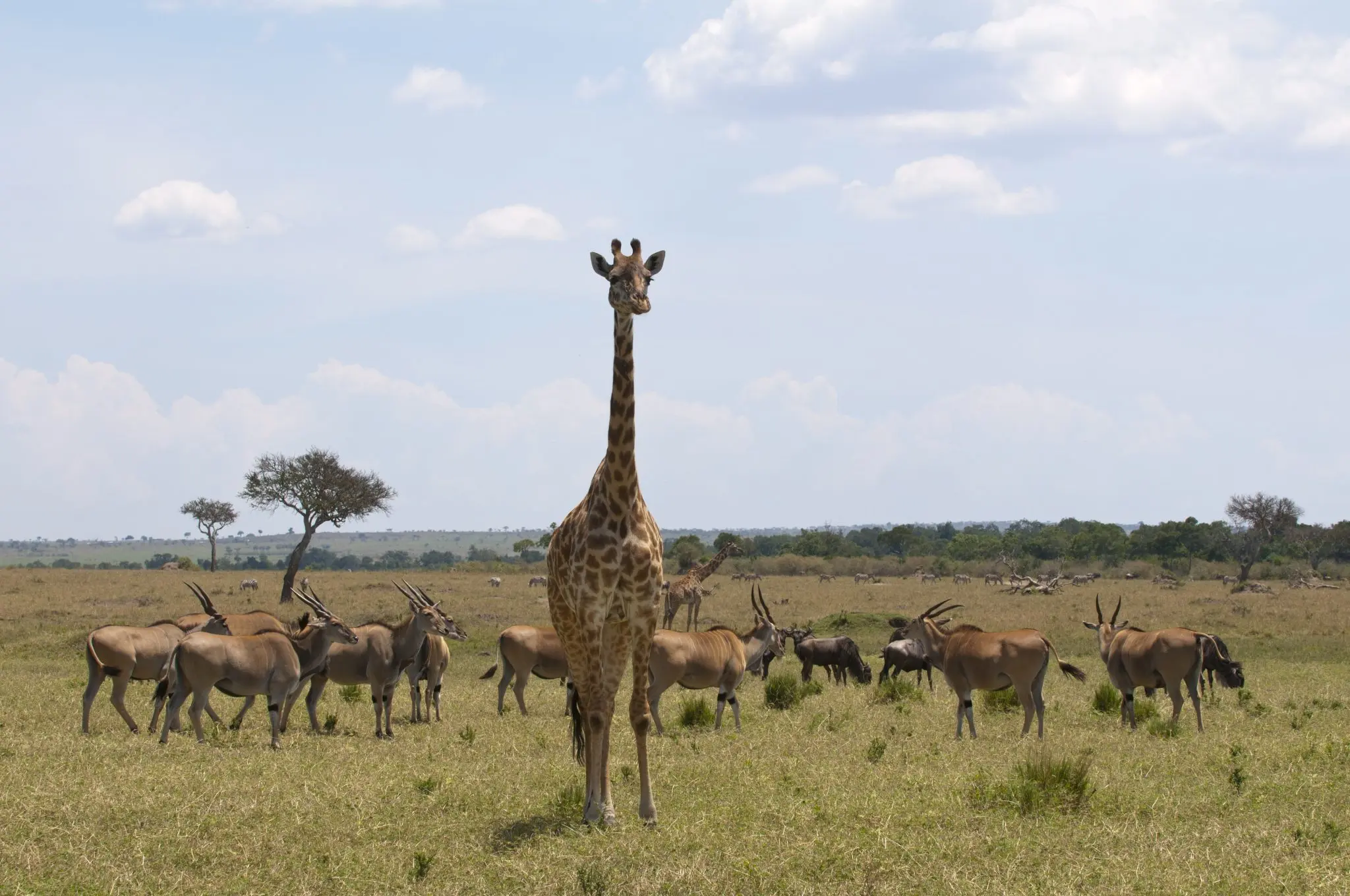
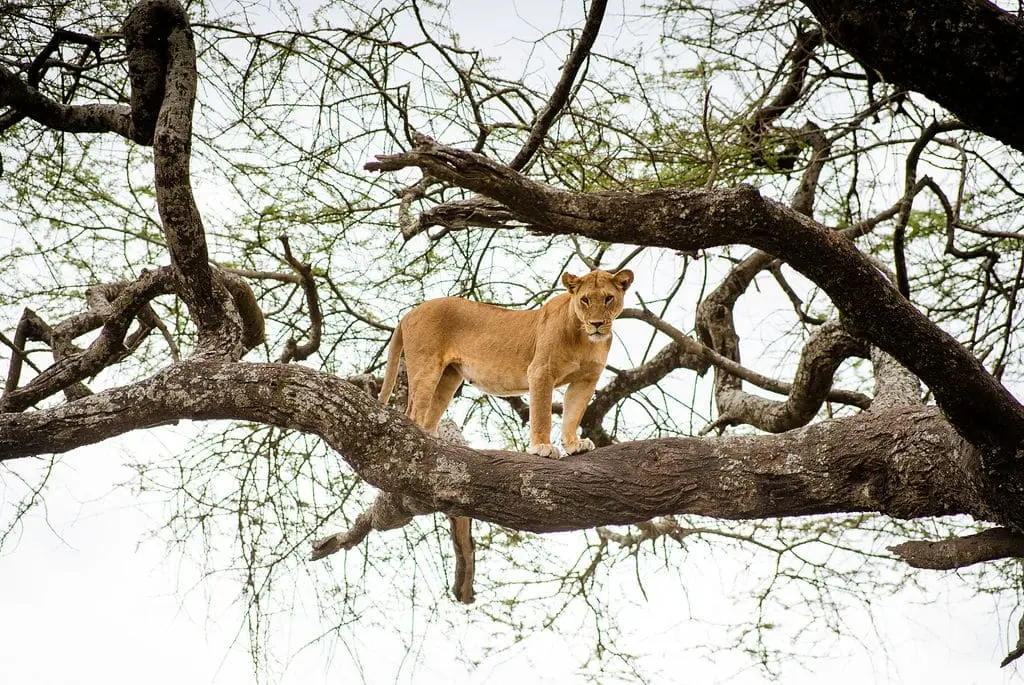
The Mara covers roughly 1,510 km² of rolling grassland in Kenya’s southwest, and its resident wildlife would be reason enough to visit even without the migration. Lion prides here are some of the best-studied in Africa, and cheetah sightings are unusually reliable given the open terrain.
The migration adds a second layer entirely. Between July and October, over a million wildebeest and several hundred thousand zebra cross from Tanzania’s Serengeti in search of grazing, and the Mara River crossings that result are as close to guaranteed drama as safari gets, though exact timing shifts a little each year depending on rainfall.
The Laikipia Conservancies
North of the Mara, Laikipia works on a different model altogether. Instead of a single government-run reserve, the land is split among private conservancies, many co-owned by local communities, where vehicle numbers per sighting are capped and off-road driving is generally allowed, something not permitted in the Mara reserve itself.
This is also Kenya’s stronghold for black and white rhino, protected within fenced sanctuaries such as Ol Pejeta, alongside healthy populations of wild dog, an increasingly rare sight elsewhere in East Africa. Because conservancy fees fund the local community directly, Laikipia has become something of a proving ground for how tourism revenue and conservation can work together rather than in tension.
Amboseli
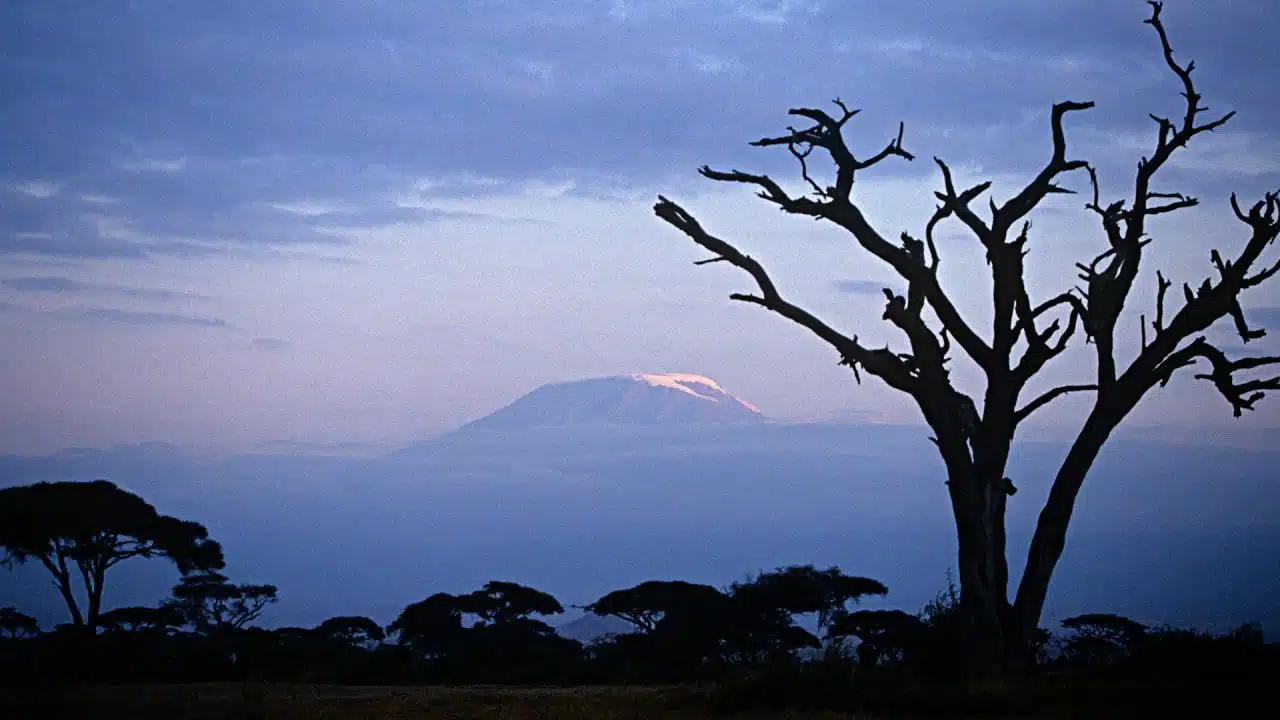
Amboseli sits in Kenya’s south, close to the Tanzanian border, and is built around one image above all others: elephant herds crossing dry lakebed with Kilimanjaro rising behind them. The park itself is compact — around 392 km² — which concentrates wildlife around its swamps, particularly during the dry season when the surrounding plains empty out.
Amboseli is also home to one of the longest-running elephant research projects in Africa, running since the 1970s, which means many of the resident elephants are individually known and tracked by researchers on the ground.
Samburu
North again, and drier, Samburu offers something the Mara and Amboseli don’t: a set of species found almost nowhere else in Kenya, sometimes nicknamed the “Special Five” — Grevy’s zebra, reticulated giraffe, Somali ostrich, gerenuk, and Beisa oryx, all adapted to the semi-arid terrain along the Ewaso Nyiro River.
It’s a quieter circuit than the Mara or Amboseli, both in terms of visitor numbers and in the starker, more textured landscape itself.
What Kenya Does Better Than Almost Anywhere Else
If there’s one thing that sets Kenya apart from its neighbours, it’s the conservancy model itself. Community-owned land bordering a major reserve, funded directly by tourism, with lower vehicle density and more flexible game viewing than the reserve it sits beside, that combination is now used across the region, but Kenya, and Laikipia in particular, is where it was refined.
Best Time to Visit Kenya
July through October is peak season for the Mara, timed around the migration’s river crossings. Outside that window, the Mara and its surrounding conservancies remain excellent year-round for resident wildlife, with far fewer vehicles at sightings. Amboseli’s dry season, roughly June to October and January to February, tends to offer the clearest views of elephants against Kilimanjaro, since the animals concentrate around permanent water.
Pairing Kenya With Tanzania
Given how tightly the migration ties Kenya and Tanzania together, many itineraries split time between the Mara and the Serengeti within a single trip — read the Tanzania safari guide for how the two connect, and see the East Africa safari guide for how Kenya fits into the wider region.