
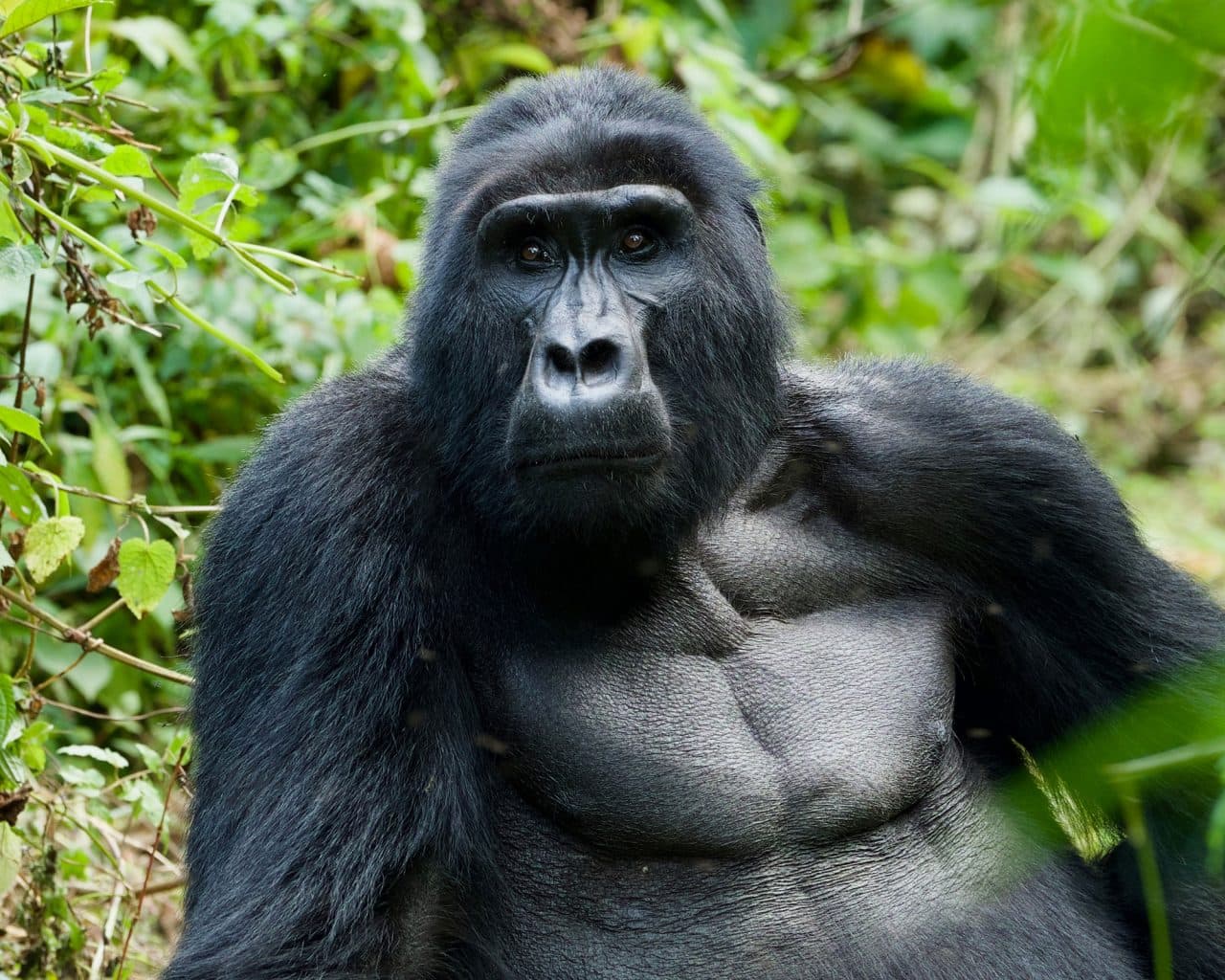
There’s a moment on most gorilla treks in Rwanda where the forest simply stops being forest and becomes a room. The undergrowth that’s been closing in for the last hour opens into a small clearing, and there, close enough that you could hear it breathing, if you weren’t already holding your own, is a silverback, entirely unconcerned by your arrival.
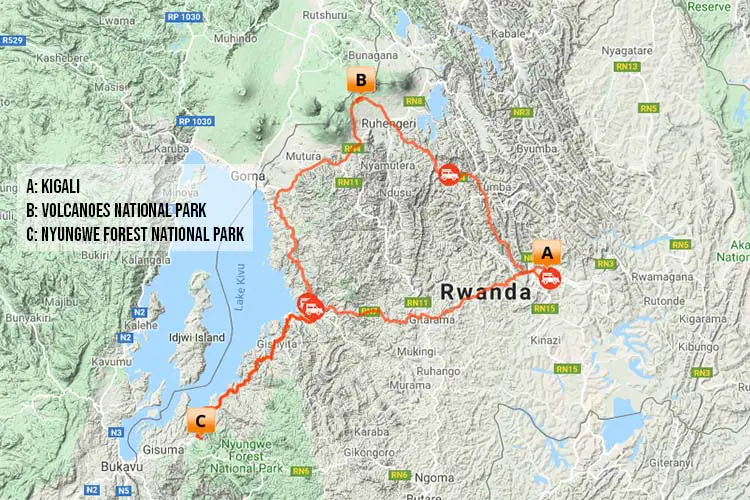
Gorilla trekking in Rwanda happens almost exclusively in Volcanoes National Park, a compact 160 km² of dense, high-altitude forest in the country’s northwest. It’s a small park by regional standards. What it holds is not.
Where the Trek Actually Happens
Treks start early, with a briefing at park headquarters before groups of up to eight trekkers are assigned to a specific gorilla family based on that morning’s tracker reports. From there, the walk itself can run anywhere from twenty minutes to five or six hours, depending on where the family happens to be that day, trackers set out ahead of the group to locate them first.
The terrain is steep, often muddy, and sits at altitude, Volcanoes National Park ranges from around 2,400 to over 4,500 metres. A reasonable level of fitness matters more here than on most East Africa itineraries, though porters are available to help with the climb for those who want the extra support.
Once the group is found, visitors get exactly one hour with the gorillas, a limit set to minimise stress on the animals and reduce the risk of disease transmission, since gorillas are susceptible to many human illnesses.
Permits and Practicalities
A gorilla trekking permit in Rwanda currently costs $1,500 per person, among the higher permit fees in the region, though the revenue funds both conservation work and community development projects around the park. Permits are limited and often need to be booked well in advance, particularly during the dry seasons.
Rwanda’s Development Board manages permit allocation and conservation programmes tied directly to the park.
Beyond the Gorillas
It’s easy to build an entire Rwanda itinerary around a single morning of trekking, but the country has more range than that. Kigali, one of the cleanest and most orderly capitals in Africa, is worth a day on either end of the trip, the Kigali Genocide Memorial, in particular, gives essential context to the country’s more recent history.
Lake Kivu, a few hours from Volcanoes National Park, offers a genuinely different pace: quiet lakeside lodges, boat trips, and a chance to decompress after the early starts and steep climbs of trekking days.
A Featured Stay
Several lodges sit right at the base of the park, positioned to cut the drive to the trailhead down to minutes rather than hours on trekking mornings, worth prioritising if an early, unrushed start matters to you, which after a five a.m. wake-up call, it usually does.
Rwanda or Uganda for Gorillas?


Rwanda and Uganda share the same gorilla population across the same mountain range, so the choice between them often comes down to logistics and companion experiences rather than the gorillas themselves. Read the Uganda safari guide for how Uganda’s side compares, including chimp tracking and classic savanna safari in the same trip — or see the East Africa safari guide for how Rwanda fits into a wider regional itinerary.