
Key Takeaways
|
Introduction
A fly-in safari reframes the entire East Africa experience. Instead of spending hours on dusty roads between destinations, you board a light aircraft, cross landscapes that would take a full day to drive, and land on a grass airstrip inside the wilderness. The time saving is real, the access to remote areas is genuine, and the aerial perspective of the bush — herds moving across plains, rivers cutting through woodland — is an experience in its own right.
What a Fly-In Safari Actually Is
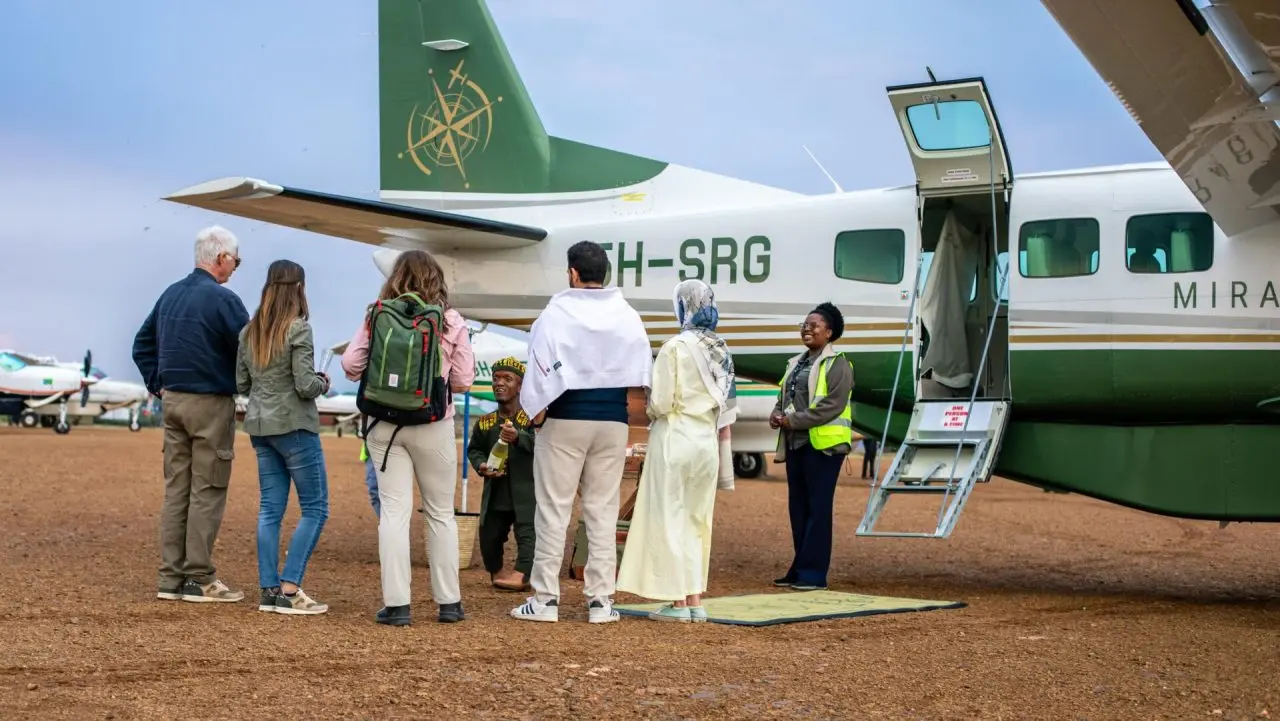
A fly-in safari replaces road transfers between camps with scheduled or private light aircraft flights. The aircraft are small — typically Cessna Caravans or similar — carrying between 4 and 12 passengers. Airstrips are often little more than cleared grass runways inside or on the boundary of national parks.
The flights themselves are short, usually between 20 minutes and 1.5 hours, but the distance they cover on the ground is substantial. A drive from Arusha to the central Serengeti takes roughly eight hours. The same journey by air takes under an hour.
What a fly-in safari is not is a replacement for the game drive experience itself. All wildlife viewing still happens by vehicle on the ground. The aircraft gets you there — efficiently and with considerably more comfort than a long road transfer.
Who Fly-In Safaris Are Best Suited To
Fly-in safaris aren’t the right format for every traveller — but for specific groups they are clearly the superior choice.
Time-poor travellers with 7–10 days who want to cover multiple destinations without losing full days to road travel benefit most. Families with young children find fly-in safaris significantly more manageable — long road transfers on rough tracks are hard on small children and tend to arrive at camp with everyone tired. Multi-destination itineraries across Kenya and Tanzania are only practical as fly-in trips. Travellers with mobility considerations find the reduced physical strain of fly-in transfers meaningful.
Typical Fly-In Routing Patterns in East Africa
Northern Tanzania circuit: Fly into the Serengeti from Kilimanjaro or Arusha, spend two to three nights, fly to the Ngorongoro area, one to two nights, then fly to Tarangire for a final two nights. This covers the full northern circuit without a single long road transfer.
Kenya-Tanzania combination: Fly into Nairobi, transfer to the Maasai Mara for the migration, then fly south across the border into the Serengeti — following the wildebeest herds in the same direction they move.
Some of East Africa’s most exceptional camps — in the northern Serengeti, Laikipia Plateau in Kenya, or the Selous in southern Tanzania — are practically inaccessible by road in reasonable time. Explore Tanzania luxury safari options to see how remote camps feature in a full itinerary.
Luggage Limits: What You Need to Know
Light aircraft have strict luggage restrictions — not as a guideline but as a hard operational limit. The standard allowance is 15kg per person in a soft-sided bag. Hard-shell suitcases cannot be accommodated in the aircraft hold and will be left behind or stored at the departure point.
A soft duffel or soft-sided holdall is what you need. Most safari camps provide laundry services, which means packing light is more practical than it sounds — three to four days of clothing is typically sufficient for a week-long trip.
FAQs
How much time does a fly-in safari actually save?
On a typical northern Tanzania circuit, fly-in transfers save between two and four full days compared to road-only travel. Those days convert directly into additional game drive time on the ground.
Are the flights safe?
East African bush flying has an established safety record with reputable operators. Companies like Coastal Aviation, Air Kenya, and SafariLink operate under civil aviation authority oversight. Choosing a licensed operator through your safari company is standard practice.
What happens if a flight is delayed or cancelled?
Weather delays are the most common disruption. Reputable operators communicate proactively and itineraries are generally built with enough flexibility to absorb short delays. Travel insurance covering trip disruption is always advised.
Can I do a fly-in safari on a moderate budget?
Fly-in safaris carry a cost premium — the flights themselves add $200–$600 per person to an itinerary depending on routing. However, when that cost is weighed against the days saved and the remote access gained, the value equation is strong for travellers with limited time.
What about luggage I don’t need on safari?
Most operators and departure hotels offer secure luggage storage. Items not needed in the bush can be stored and collected on return. Talk to our team about building your fly-in itinerary.
Conclusion
A fly-in safari is the most efficient way to experience East Africa’s wilderness at its most remote and unhurried. The time saved on transfers converts directly into time in the bush, the access to exclusive destinations is unmatched by any road-based alternative, and the experience of arriving by light aircraft into a wilderness airstrip sets the tone for everything that follows.
Start planning your East Africa fly-in safari today.