
Key Takeaways
|
Introduction
Every year, over 1.5 million wildebeest move north from Tanzania’s Serengeti into Kenya’s Maasai Mara, and the river crossings they make along the way are among the most dramatic wildlife events on the planet. But planning a Kenya migration safari takes more than picking July on a calendar. The timing shifts year to year, the Mara is bigger than most people expect, and where you stay determines almost everything about what you’ll see. This guide covers the best months, the key locations, what crossing sightings actually look like on the ground, and how to plan without leaving it to chance.
What the Great Migration Actually Looks Like in Kenya
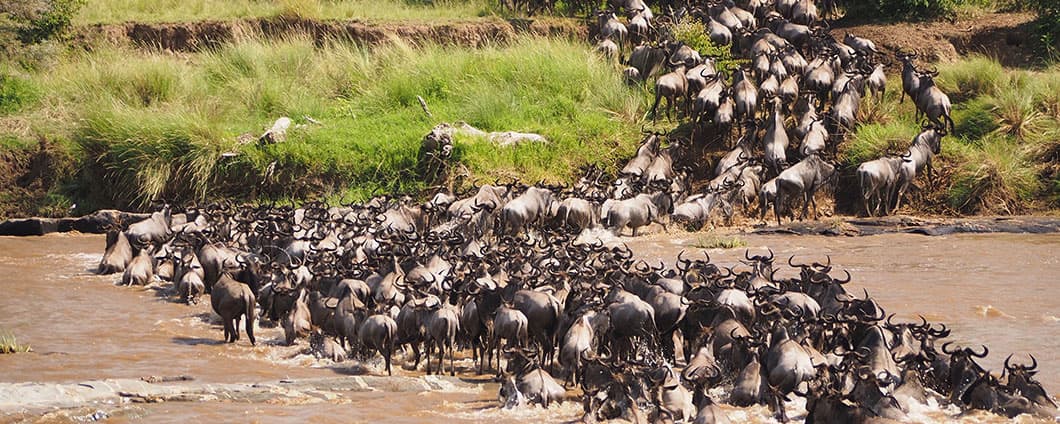
The Great Migration is not a single event, it’s a continuous, year-round movement of wildebeest, zebra, and gazelle tracking rainfall and fresh grass across the Serengeti-Mara ecosystem. Kenya gets the northern leg, which is where the famous Mara River crossings happen.
When a crossing occurs, thousands of wildebeest mass at the riverbank, hesitate, then surge across in a chaotic rush — with crocodiles waiting below. It is as extraordinary as it sounds. But crossings are unpredictable. Herds can hold at the river for days before moving, or cross multiple times in a single afternoon. No operator can guarantee one, and any that do are overselling.
What Kenya does offer is consistently high game density throughout the migration season, exceptional big cat sightings, and a landscape that rewards patience.
Best Months for a Kenya Migration Safari
Understanding the monthly breakdown helps set realistic expectations and protects your budget.
July marks the arrival of the first herds into the Mara. River crossings begin but are less frequent early in the month. Game viewing is already excellent and camps are slightly less crowded than peak.
August and September are peak migration months. Herds are fully established in the Mara, crossings happen most frequently, and the bush is dry enough to make wildlife easy to spot. This is the most sought-after window, and the most expensive.
October sees herds beginning their return south. Crossings become less predictable but still occur. Crowds thin out, rates drop slightly, and the overall game experience remains strong.
Outside this window, the Mara still offers world-class year-round wildlife, resident big cats, elephants, and buffalo are present in strong numbers throughout the year.
Mara Triangle vs Maasai Mara National Reserve: Why It Matters
Most people book “the Mara” without realising it covers two distinct areas managed separately, and the difference is significant.
The Maasai Mara National Reserve is the larger, more accessible section. It attracts the majority of visitors and has a higher concentration of camps and lodges at various price points. Game viewing is excellent but vehicle density at sightings can be high during peak season.
The Mara Triangle sits on the western side of the Mara River, managed by the Mara Conservancy. It has stricter vehicle limits, better-maintained roads, and noticeably fewer vehicles at sightings. Critically, it covers some of the most active crossing points on the river. Most Mara Triangle camps are mid-to-upper range, which naturally limits crowds.
For a migration safari focused on crossings and a more exclusive experience, the Mara Triangle is worth the premium. For flexibility and a wider range of accommodation options, the broader Reserve works well.
How to Plan Without Getting It Wrong
Timing alone won’t make or break your migration safari, logistics matter just as much.
Book early. The best camps in the Mara Triangle and private conservancies surrounding the Reserve fill 9–12 months out for August and September. Waiting until three months before means settling for what’s left.
Stay longer. Four to five nights minimum gives you multiple game drives and a realistic chance of witnessing a crossing. Two-night stays are too short, you may arrive between crossing events entirely.
Choose your guide carefully. A knowledgeable guide who understands herd movement and river behaviour will position you correctly. This matters more than camp location alone.
Combine with Tanzania if the budget allows. A Kenya-Tanzania migration circuit, starting in the Serengeti and ending in the Mara, follows the herds through their full northern journey. Explore Tanzania luxury safari options to see how a combined itinerary works.
FAQs
Kenya or Tanzania for the Great Migration?
Both are part of the same ecosystem. Tanzania offers the calving season (January–February) and the full year-round migration arc. Kenya delivers the river crossings (July–October). For crossings specifically, Kenya is the destination. For the full migration story, a combined itinerary covers both.
Do I need a private guide for a migration safari?
A private vehicle and guide gives you full flexibility — you can wait at the river as long as needed without group compromise. Shared vehicles work on a tighter schedule. For a migration-focused trip, private is strongly recommended.
How far in advance should I book?
For August and September, 9–12 months. For July and October, 6 months is generally sufficient, though top camps fill quickly regardless.
How many days do I need in the Mara?
Four to five nights is the minimum for a realistic crossing opportunity. Seven nights gives you genuine depth — multiple areas, varied game drives, and a buffer if crossings are slow early in your stay.
Can I combine a Kenya migration safari with Zanzibar or Kilimanjaro?
A Zanzibar beach extension pairs naturally with a Mara safari — most routes fly through Nairobi. Kilimanjaro combinations work best with a Tanzania leg added. Speak to our team about building a custom itinerary.
Conclusion
A Kenya migration safari is one of the most rewarding wildlife experiences in Africa, but it rewards preparation. The right months, the right location within the Mara, and enough time on the ground are what separate a good trip from an exceptional one. If you’re targeting river crossings, August and September in the Mara Triangle remain the benchmark.