
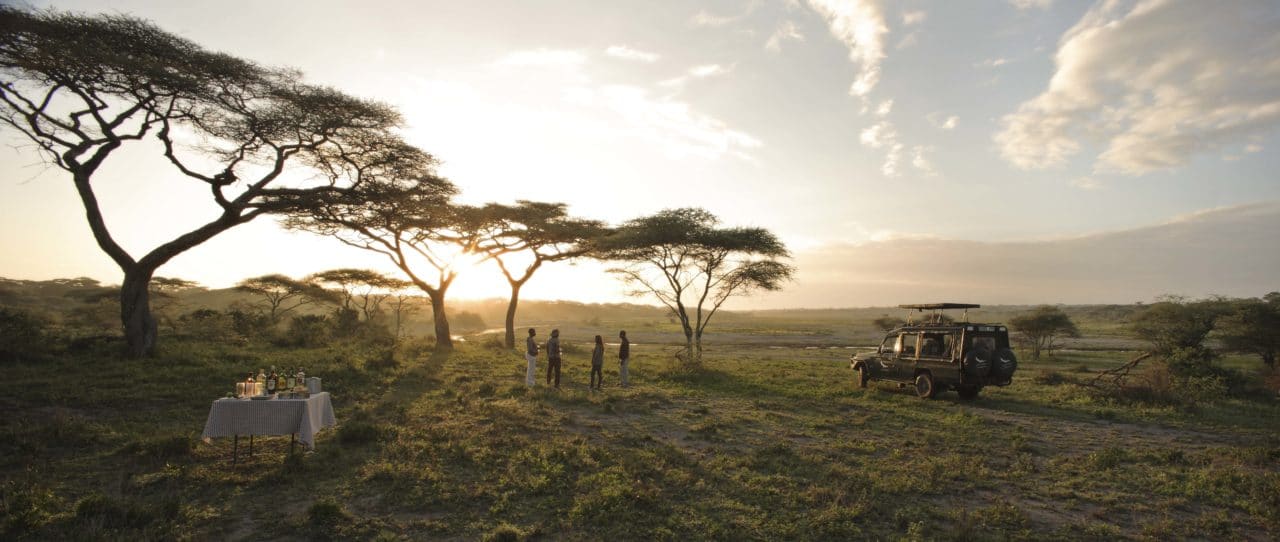
Scale is the word that keeps coming up with a Tanzania safari, and for good reason. The Serengeti alone covers close to 14,750 km² — nearly ten times the size of Kenya’s Masai Mara, and that’s before accounting for Ngorongoro, Ruaha, and the string of southern parks that see a fraction of the visitor numbers.
Most of the wildebeest migration’s actual story plays out here, not in Kenya. The river crossings that make headlines are really just the finale of a year-long circuit that begins and mostly ends within Tanzania’s borders.
The Serengeti and the Migration
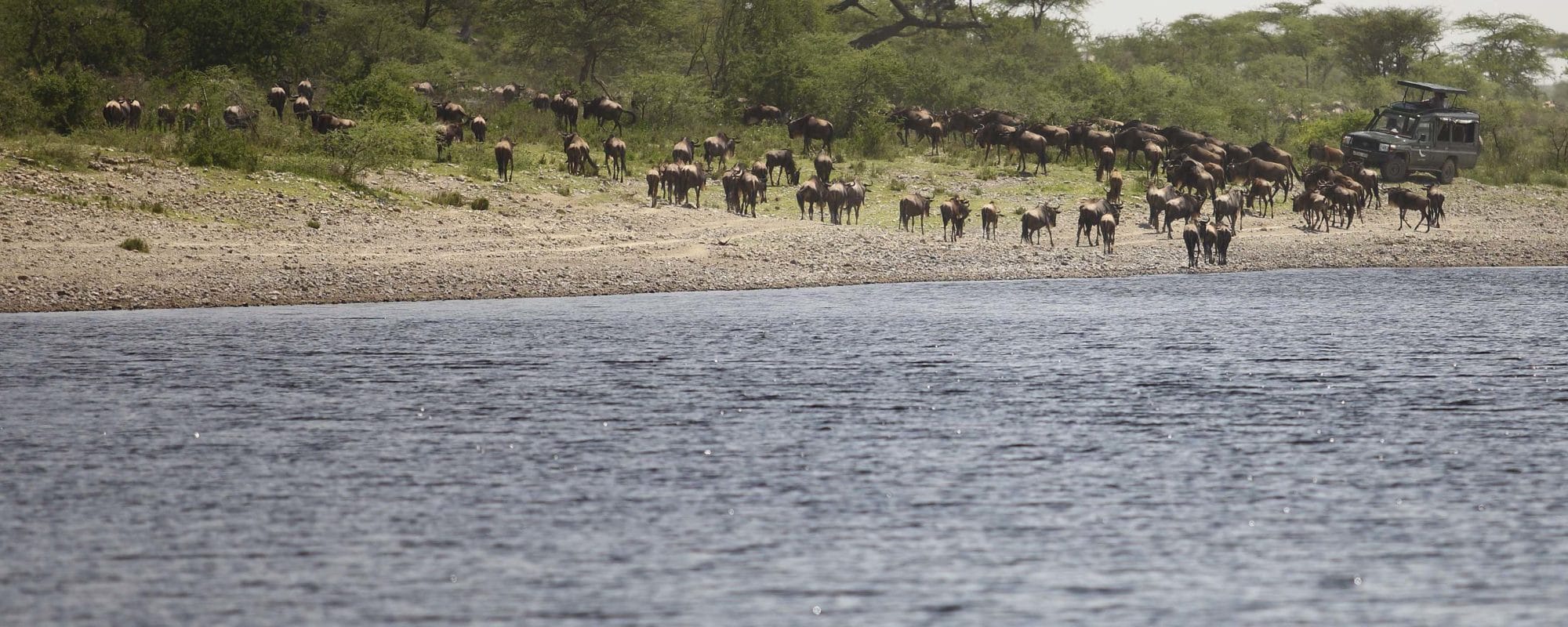
The migration moves in a rough clockwise loop through the Serengeti ecosystem each year. Calving season runs roughly January through March in the short-grass plains of the southern Serengeti, when up to 8,000 wildebeest calves can be born in a single day, and with them, an intense concentration of predators.
From April, the herds begin pushing north and west through the Grumeti region, reaching the Mara River and the Kenyan border by June through September, before circling back south again as the rains return. Because the plains here are so open, the sightings tend to feel less like spotting an animal and more like watching weather move.
Ngorongoro Crater
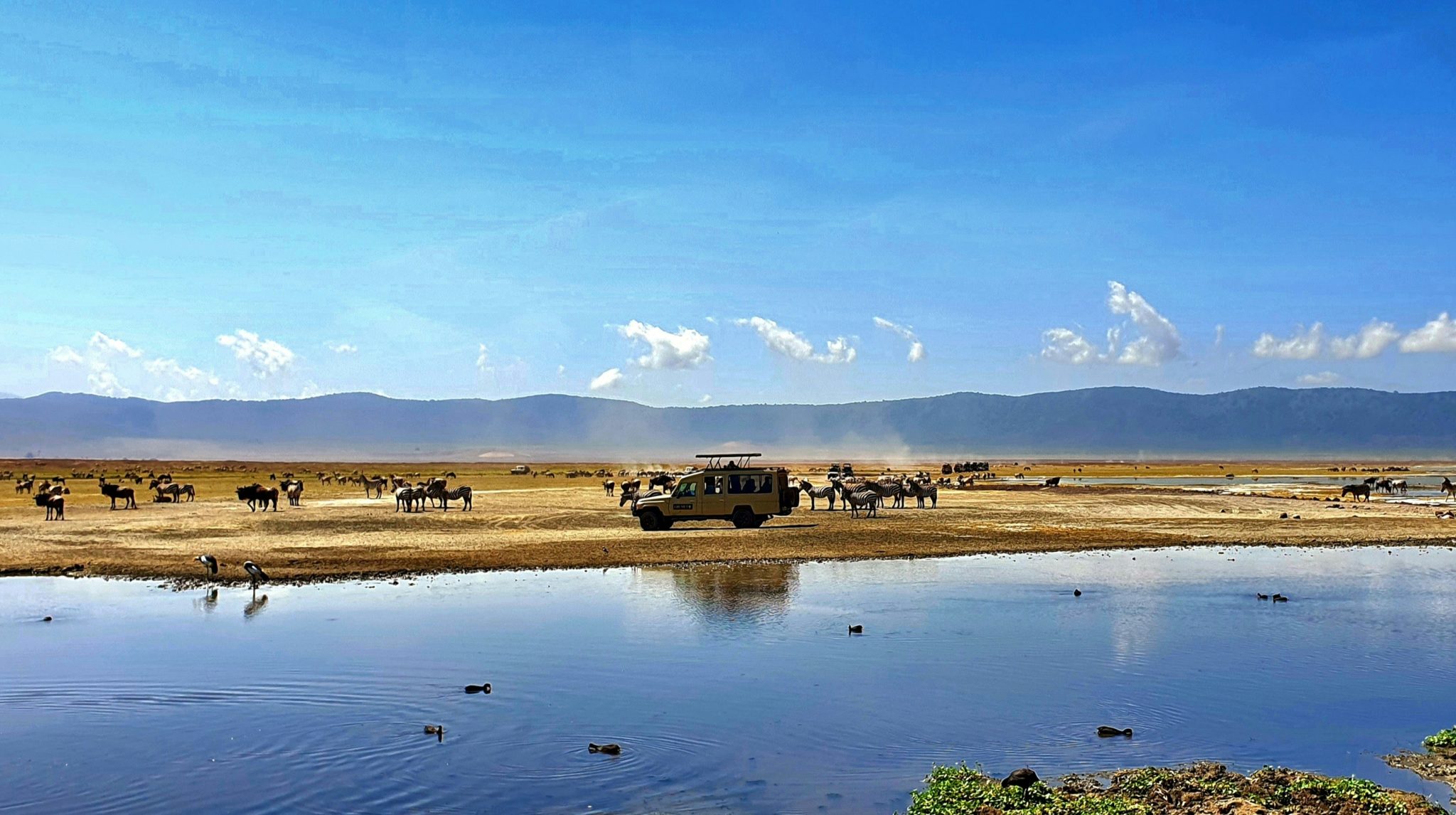
Ngorongoro is a different kind of landscape entirely, a collapsed volcanic caldera roughly 260 km² across the floor, walled in on all sides by a crater rim rising over 600 metres above it. That enclosure concentrates an extraordinary density of resident wildlife into a relatively small, self-contained space.
It’s one of the few places in Africa where sighting all of the Big Five in a single day is a realistic expectation rather than a hopeful one, largely because the animals here don’t migrate out, the crater floor holds enough water and grazing to support them year-round.
The Quiet South: Ruaha and Nyerere
Further south, Ruaha National Park and Nyerere National Park (formerly part of the Selous Game Reserve) offer much of the same drama as the northern circuit with a fraction of the vehicle traffic. Ruaha is Tanzania’s largest national park and holds one of East Africa’s largest remaining elephant populations, along with a healthy density of lion and the striking, sable-horned greater kudu.
Nyerere, meanwhile, is built around the Rufiji River system, which opens up boat safaris alongside conventional game drives, a genuinely different way to see wildlife, and one the northern parks generally can’t offer.
For travellers who’ve already done a classic Serengeti trip, or who simply want fewer vehicles at every sighting, the south is where Tanzania’s safari offering gets interesting again.
Migration Timing, Month by Month

- December–March: Southern Serengeti plains, calving season
- April–May: Herds begin moving north and west through central Serengeti
- June–July: Grumeti River crossings
- August–September: Mara River crossings, northern Serengeti
- October–November: Herds begin the return journey south
These windows shift by a few weeks each year depending on rainfall, so if the migration is the centrepiece of your trip, it’s worth checking current positioning closer to your travel dates. Tanzania National Parks publishes updates on wildlife movement across the park system.
Best Time to Visit Tanzania
For the migration specifically, timing depends on which part of the story you want to see, calving season in the south from January to March, or the river crossings in the north from June to September. Ngorongoro Crater, by contrast, is strong year-round given its resident (non-migratory) wildlife. The dry season overall, June through October, tends to offer the easiest game viewing across the country, since animals concentrate more predictably around remaining water sources.
Pairing Tanzania With Kenya

Tanzania and Kenya share the same migration ecosystem, and many itineraries combine both, the Serengeti for the bulk of the migration’s story, the Mara for the river crossings that close it out. Read the Kenya safari guide for the other half of that picture, or see the East Africa safari guide for how Tanzania fits into a wider regional trip.


