Everything to Know Before You Go
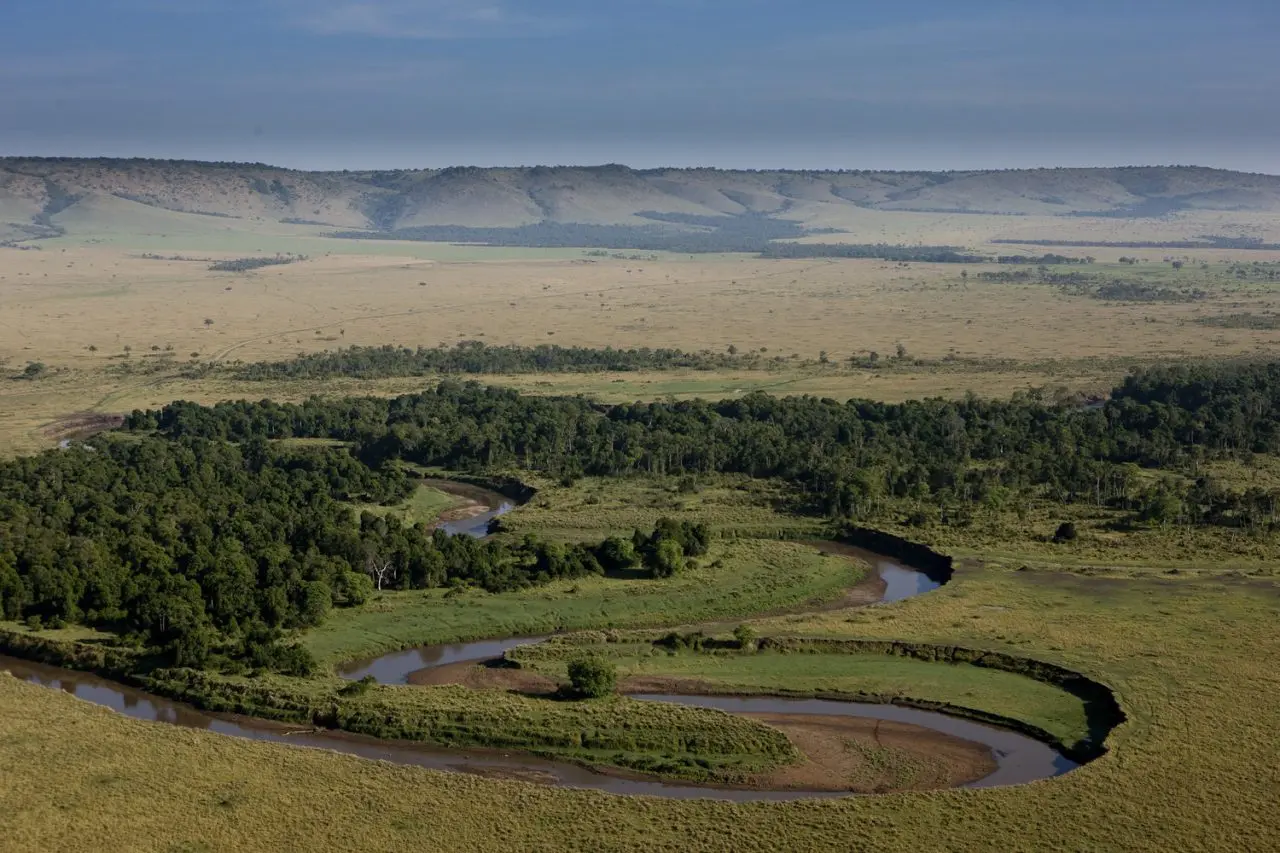
Say “safari” to most people and, whether they know it or not, they’re probably picturing the Mara. Open grassland running to the horizon, a lone acacia breaking the skyline, a leopard draped over a low branch — it’s the image the whole idea of an African safari was built on, and it still delivers on it more reliably than almost anywhere else on the continent.
A Masai Mara safari covers more ground than the reserve’s name suggests, though. The Mara ecosystem stretches well beyond the reserve boundary itself, into a ring of private conservancies that, for many repeat visitors, have become the better half of the experience.
The Reserve Itself
The Masai Mara National Reserve covers roughly 1,510 km² in Kenya’s southwest, bordering Tanzania’s Serengeti along its southern edge — the two are really one continuous ecosystem, just split by a national border. Within the reserve, wildlife density is about as high as anywhere in Africa: resident lion prides that have been studied continuously for decades, healthy leopard numbers despite their usual talent for staying hidden, and cheetah sightings that are unusually consistent given how open the terrain is.
Vehicle numbers at a single sighting can climb quickly here during peak months, since the reserve itself doesn’t cap visitor numbers the way the surrounding conservancies do. That’s the trade-off for staying inside the reserve boundary: unmatched wildlife density, at the cost of sharing the view.
The Conservancies Around It
Ringing the reserve is a network of private and community-owned conservancies — Mara North, Naboisho, Olare Motorogi, and several others — each leasing land directly from Maasai landowners. These operate under stricter rules than the reserve: fewer vehicles permitted per sighting, and in most cases, night drives and off-road driving allowed, neither of which is permitted inside the reserve itself.
The trade-off runs the other way from the reserve — slightly lower overall wildlife density in exchange for a genuinely quieter, more flexible experience, and the knowledge that a meaningful share of what you’re paying for goes directly back to the community that owns the land.
The River Crossings
Between roughly July and October, the Masai Mara becomes the stage for the most-photographed moment of the wildebeest migration: the crossing of the Mara River, where herds numbering in the hundreds of thousands funnel through a handful of crossing points, with crocodiles waiting in the water below.
Crossings aren’t scheduled — herds gather at the riverbank, sometimes for hours, before something triggers the crossing, which makes patience as much a part of the experience as timing. For the full picture of how the Mara crossings fit into the migration’s year-long cycle across both Kenya and Tanzania, see the Great Migration guide; for help timing a trip around a specific crossing window, the migration planning resource goes into the logistics.
Choosing Where to Stay
Broadly, the choice comes down to reserve versus conservancy, and it’s worth deciding early since it shapes almost everything else about a Mara trip. Staying inside the reserve puts you closest to the highest wildlife concentrations and, during migration season, the crossing points themselves. Staying in a conservancy trades a little of that density for night drives, walking safaris in some areas, and a noticeably quieter experience at every sighting.
Many repeat visitors split a trip between the two — a few nights in a conservancy for the quieter pace, then a few inside the reserve itself if the timing lines up with the crossings.
Best Time to Visit the Masai Mara
July through October is peak season, driven by the river crossings, and it’s also when the reserve is busiest and rates are highest. Outside that window, the Mara doesn’t go quiet — resident wildlife remains excellent year-round, and the conservancies in particular stay rewarding even well outside migration season, since their appeal was never solely about the crossings to begin with.
Beyond the Mara
The Mara is often a first stop rather than the whole trip. For how it fits into Kenya’s wider offering — Laikipia’s conservancy model, Amboseli’s elephants against Kilimanjaro, Samburu’s arid-country specialists — see the Kenya safari guide. And for how Kenya sits alongside Tanzania, Rwanda, and Uganda in a broader regional trip, the East Africa safari guide covers the full picture.